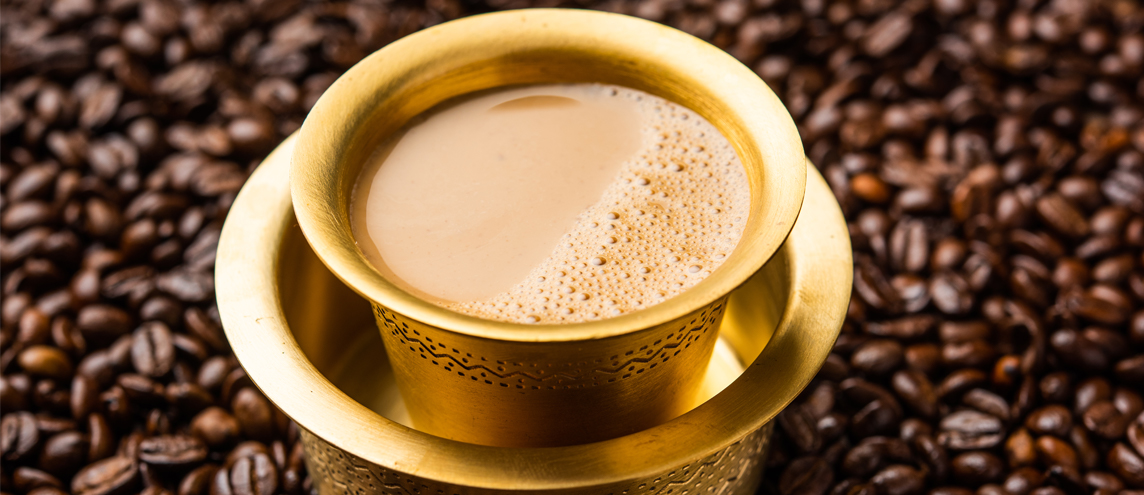
Same Since 1926
Best Coffee Brand in South India Since 1926
Summary
South Indian filter coffee has barely changed in a century, and that's the point. This blog explores why the tradition held, what shifted around it, and what that means for how we drink coffee today.
Introduction
Most food trends have a shelf life. A new preparation style appears, gets popular for a few years, then fades. South Indian filter coffee has been brewed the same way for over a century, and it is more relevant today than it was fifty years ago.
That's not luck. It's not marketing either.
It reflects something more practical: the method works, the taste holds, and the culture around it never found a reason to move on. If you're curious about what keeps the best coffee brand in South India rooted while everything else in the beverage world keeps shifting, this blog breaks it down clearly, what stayed the same, what changed around it, and why that distinction matters.
Then: How South Indian Coffee Was Built to Last
South Indian filter coffee did not become a tradition by accident. The conditions that shaped it were specific, the right growing regions, the right roasting approach, and a brewing method designed for the way South Indian households actually functioned.
Coffee cultivation in India goes back to the 17th century, rooted in the hills of Chikmagalur and later across Coorg and the Nilgiris. These regions produce beans with a naturally dense, full-bodied character. South Indian roasters learned to work with that profile, not against it, dark roasts, deliberate chicory blending, slow decoction through a metal filter.
The chicory component is worth understanding specifically. Chicory root, when roasted and ground alongside coffee, adds body, reduces bitterness at scale, and stretches the decoction without thinning the flavour. The 80:20 ratio, coffee to chicory, became the benchmark not by convention alone, but because it consistently produced the best result when mixed with hot milk in South Indian proportions.
By the time Narasu's was established in 1926, these foundations were already in place. The brand's role was to standardise quality within that tradition, consistent roasting, reliable blending, and a product that tasted the same whether you bought it in Salem or Coimbatore.
Now: What Changed Around South Indian Coffee
The coffee category in India today looks almost nothing like it did in 1990. Cold brew, single origin, capsule machines, espresso chains, the market has expanded dramatically, and consumption patterns have shifted across age groups and geographies.
And yet South Indian filter coffee has not been displaced. It's grown alongside these new formats rather than being replaced by them.
What changed is not the coffee itself, it's the context in which people drink it. A 28-year-old working from a one-room apartment in Bengaluru doesn't have the same kitchen setup as a joint family in Madurai. The time available is different. The equipment is sometimes different. What hasn't changed is what they actually want from the cup.
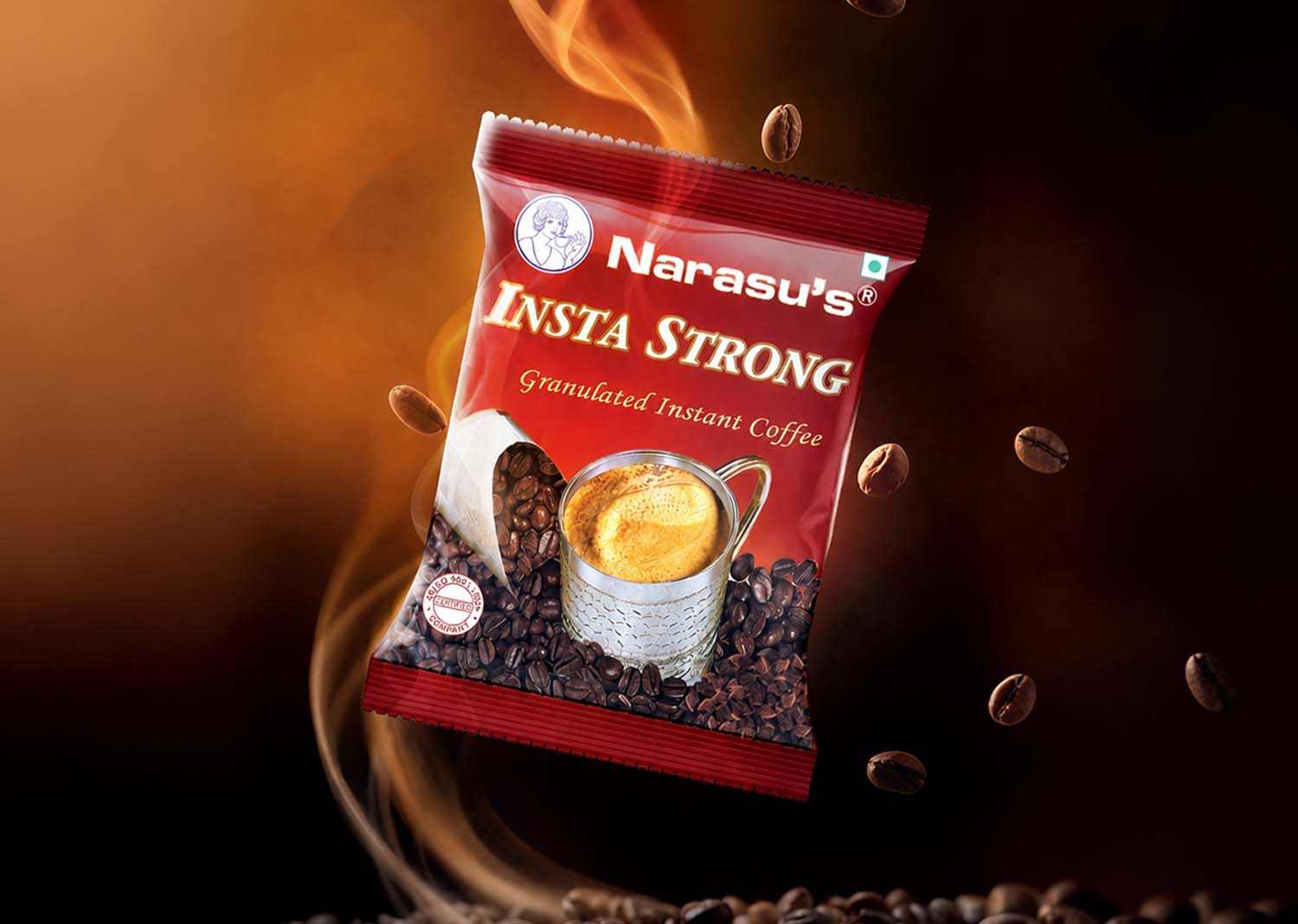
That's the gap that practical adaptation has addressed. Narasu's Insta Strong Instant Filter Coffee was developed for exactly this kind of household, the person who wants the characteristic strength and body of a South Indian brew without the setup time a traditional filter requires. It's not a replacement for the filter method. It's the same flavour philosophy applied to a different lifestyle constraint.
The tradition didn't change. The delivery adapted to meet people where they are.
The Chicory Question: Why the Blend Still Matters
One of the most misunderstood aspects of South Indian filter coffee is the role of chicory. Outside of South India, chicory blends are sometimes treated as a cost-cutting measure or a historical leftover. Within South India, the blend is considered a deliberate craft decision.
The right chicory ratio affects the body of the decoction, the way it combines with milk, and how the flavour holds when the coffee cools slightly, which matters because South Indian coffee is often consumed at a temperature lower than standard espresso service. A well-blended coffee powder produces a decoction that still tastes full even at 60 to 65 degrees Celsius. A poorly blended one goes flat quickly.
This is not a minor technical detail. It's precisely what makes Narasu's filter coffee taste different from a strong north Indian coffee or an Italian espresso, even if the bean origins overlap, the blend is not incidental, it is the product.
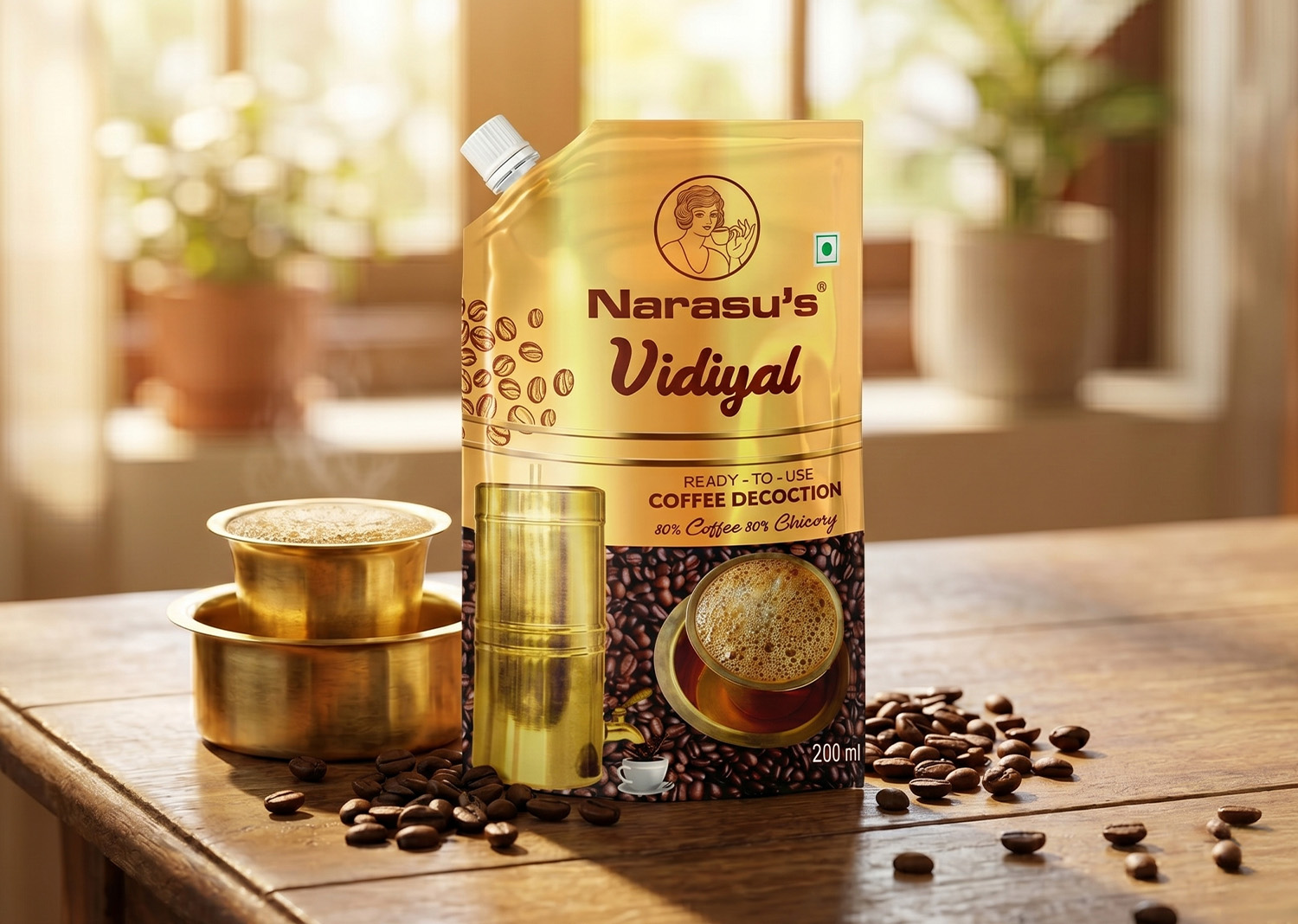
For those who want the convenience of a ready decoction without compromising on this balance, Narasu's Vidiyal Filter Coffee Decoction offers the slow-brewed depth of a traditional filter, already prepared, ready to combine with hot milk in the proportions you prefer.
The Consistency Factor: Why Longevity Builds Trust
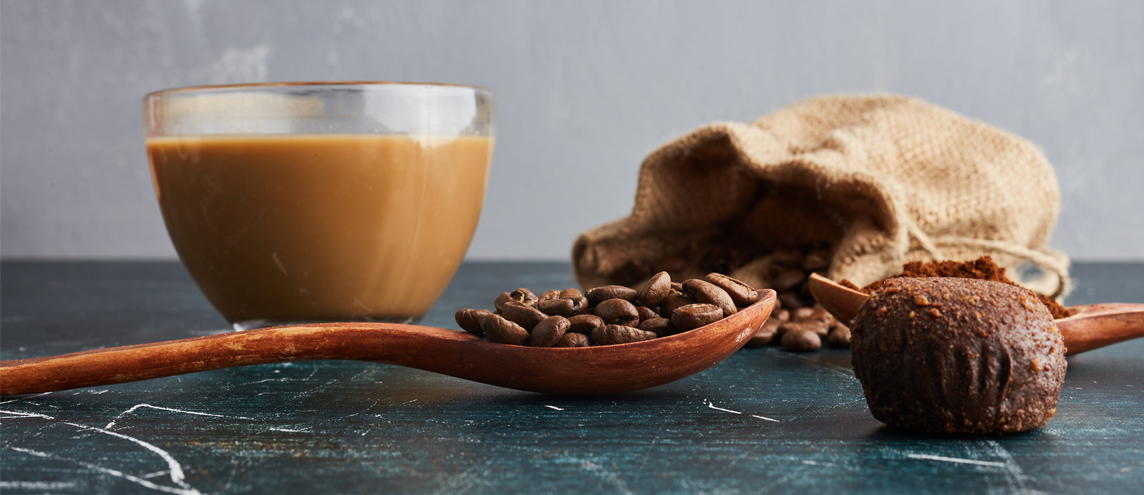
In food and beverage, there is a specific kind of trust that only time can build. It's not the trust you extend to a new brand because their packaging looks good or their story is compelling. It's the trust you extend because the product has tasted the same every single time, across years or decades, and you've stopped thinking about it.
South Indian households that have used the same coffee brand for two or three generations aren't doing it out of habit alone. They're doing it because the brand has never given them a reason to look elsewhere. That's a harder thing to achieve than most people realise.
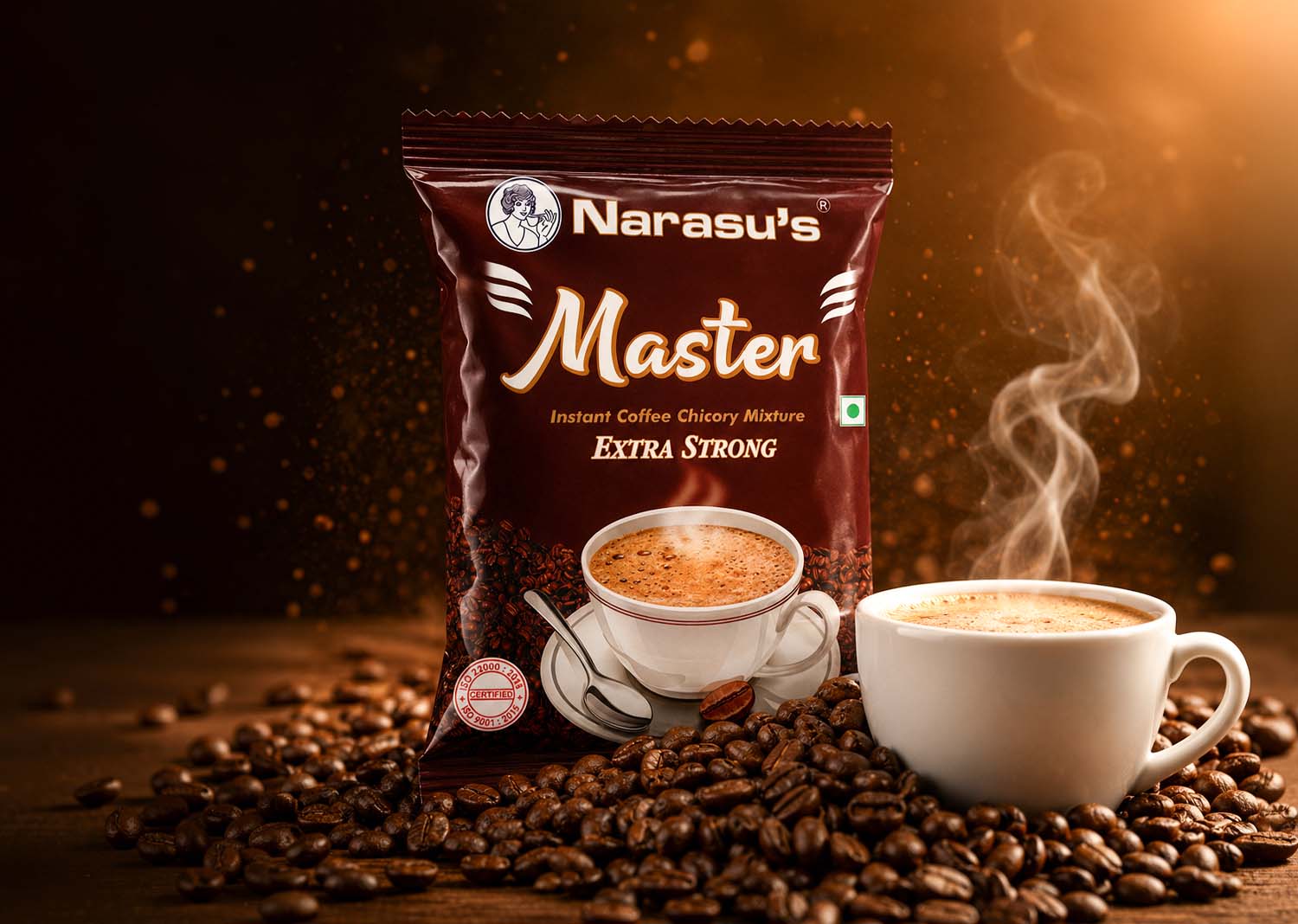
Maintaining consistency across nearly a hundred years requires discipline in sourcing, roasting, and blending, not innovation for its own sake, but the kind of incremental refinement that keeps quality stable even as input variables shift. Narasu's Master Extra Instant Filter Coffee reflects this thinking: the same reliable flavour profile that long-term users expect, in a format accessible to households that have shifted away from traditional filter equipment.
This is what it looks like when a brand treats consistency as a feature rather than a limitation.
Conclusion
South Indian filter coffee has remained constant not because the people who drink it are resistant to change, but because the product itself is genuinely difficult to improve upon. The growing regions, the roast profile, the chicory balance, the decoction method, each element has been refined over generations into something that works.
What the best coffee brand in South India has demonstrated over nearly a century is that consistency, when built on real quality, is its own competitive advantage. Formats have adapted, instant options, ready decoctions, varied blends, but the core has held.
That's not nostalgia. That's product integrity.
Frequently Asked Questions
Q1: What is the ideal coffee-to-chicory ratio for South Indian filter coffee?
The widely used ratio is 80% coffee to 20% chicory. This balance produces a decoction with full body and enough intensity to hold up when mixed with hot milk. Ratios vary slightly by brand and regional preference, but this range consistently delivers the taste profile South Indian coffee is known for.
Q2: How is instant filter coffee different from regular instant coffee?
Standard instant coffee is typically made from lighter roasts and lacks the chicory component that defines South Indian filter coffee. Narasu's Insta Strong Instant Filter Coffee is formulated to replicate the stronger, more layered character of a traditional decoction, making it a closer substitute for filter coffee rather than a generic instant option.
Q3: Can filter coffee decoction be stored and used later?
Yes. A properly prepared decoction can be stored in the refrigerator for up to two days without significant flavour loss. Narasu's Vidiyal Filter Coffee Decoction offers this convenience in ready-to-use form, removing the preparation step while retaining the depth of a slow-brewed decoction.
Q4: Why has South Indian coffee culture stayed so consistent compared to other regions?
The combination of strong local coffee cultivation, a distinct brewing tradition, and generational consistency in household habits has made South Indian filter coffee particularly resistant to displacement. The format works well for the way South Indian households consume coffee, with milk, at scale, and multiple times a day, which limits the appeal of switching to alternatives that don't serve those needs as effectively.
1771819270.jpg)
1771822569.jpg)