
More Than A Sip
Did You Know Coffee Decoction Does More Than This?
Summary
Most people use coffee decoction only for their morning cup. But a well-made decoction has far more range than that. Here are five practical, culture-rooted ways to use it every day, straight from South India's oldest coffee tradition.
Introduction
Most South Indian households treat coffee decoction as a single-use ingredient. It goes into the tumbler, gets mixed with hot milk, and that is where the story ends.
But if you have ever had leftover decoction sitting in your kitchen and wondered what else it could do, you are not alone. Across South India, home cooks and everyday coffee lovers have quietly been using decoction in ways that go well beyond the morning cup.
The best coffee brand in South India has always understood that a well-made decoction is more than a breakfast ingredient. It is a deeply flavoured concentrate with real everyday range. This blog covers five practical ways to use your coffee decoction and explains clearly why each one works as well as it does.
1. Cold Coffee That Actually Tastes Like Real Coffee
Most cold coffee made at home in India uses instant powder, sugar, and milk blended together. The result is sweet and cold but it rarely tastes like actual coffee.
When you use a proper decoction as your base, the experience changes completely. The depth that comes from a slow-brewed South Indian decoction holds up against cold milk and ice in a way that instant powder cannot replicate. You get the actual body, the bitterness, and the finish that makes coffee worth drinking.
The ratio is simple. Two parts cold milk, one part decoction, sugar to taste, and ice. Blend or stir depending on the texture you prefer. If you want it creamier, condensed milk works better than regular sugar.
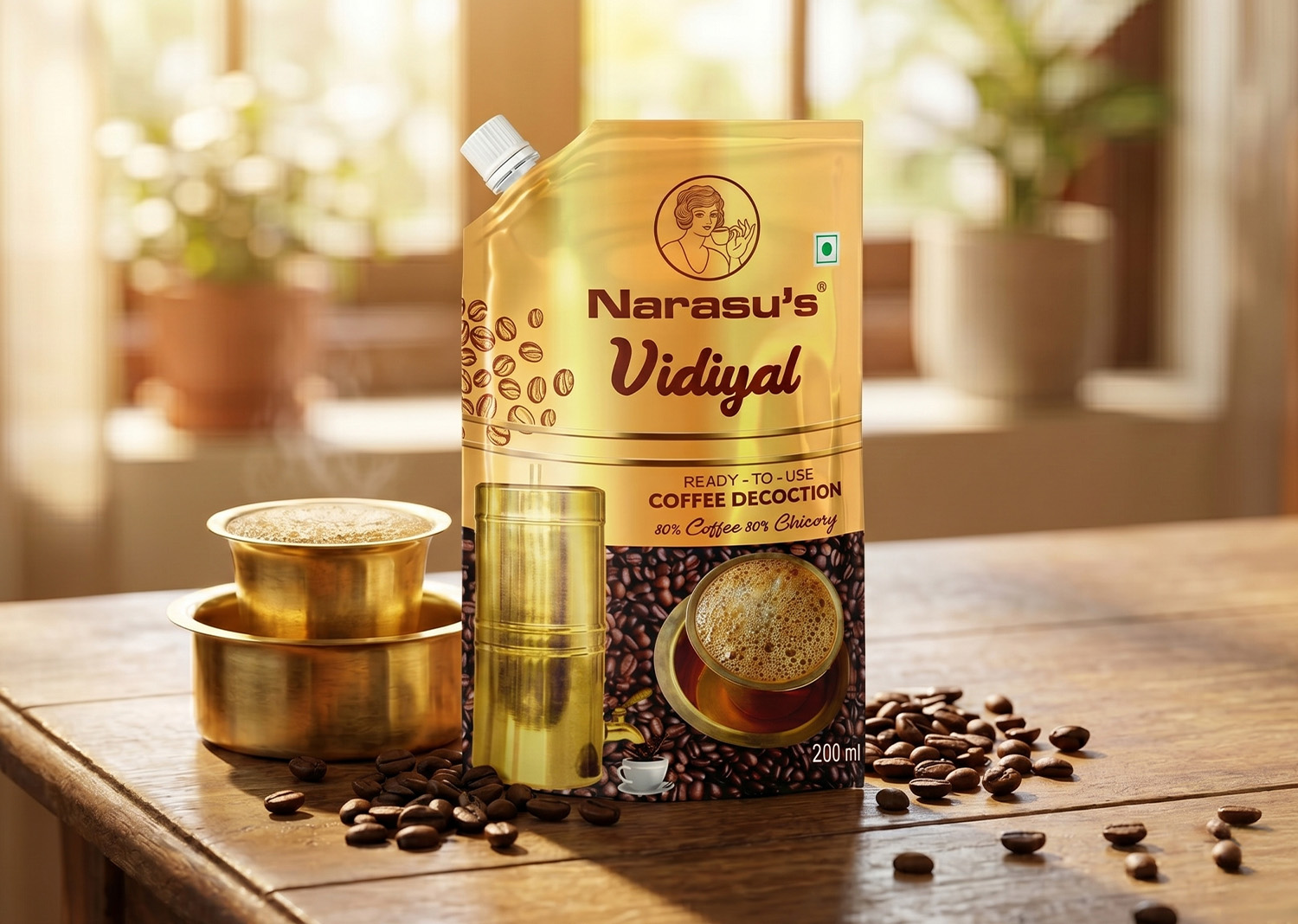
Narasu's Vidiyal Filter Coffee Decoction works particularly well here because it is already brewed to a consistent strength. Your cold coffee tastes the same every single time without any guesswork on how long to brew or how much powder to use.
2. Coffee Marinade for Meat and Vegetables
This one surprises most people, but it is a well-established technique in South Indian home cooking that has simply not been talked about enough.
Coffee decoction adds a quiet layer of bitterness and depth to marinades that balances well against spice and fat. It works particularly well with chicken, mutton, and firm vegetables like cauliflower or mushrooms. The coffee does not make the food taste like coffee. It adds a background complexity that is difficult to identify but easy to notice when it is missing.
A simple marinade to try: combine decoction with curd, ginger garlic paste, red chilli powder, turmeric, and salt. Let your protein or vegetables sit in this for at least two hours before cooking. The result is a more layered flavour than a standard curd-based marinade delivers.
The reason this works is that coffee contains natural tannins and acids that act as a mild tenderiser while also adding colour and depth to the final dish. A strong, well-balanced decoction gives you the best result here.
Before you start experimenting with decoction in your kitchen, it helps to understand why the quality of the base matters so much. Our blog on what makes Narasu's the best explains the role of the chicory blend and roast profile in detail, and it will change how you think about every use case listed here.
3. Coffee Cake and Desserts Without the Guesswork
Coffee-flavoured desserts are popular across South India, from coffee halwa to coffee-soaked cakes. Most recipes call for dissolved instant coffee or espresso, but decoction is a far better substitute because it already carries the full flavour profile of a South Indian brew, including the chicory character that instant coffee cannot provide.
For a basic coffee cake, replace the liquid component in your recipe with decoction instead of water or milk. You will notice the flavour is more rounded and less sharp compared to using instant coffee powder.
Coffee halwa is another example where decoction outperforms powder. The slow-cooked texture of halwa benefits from a flavour base that has already been extracted properly rather than one that dissolves quickly and fades during the cooking process.
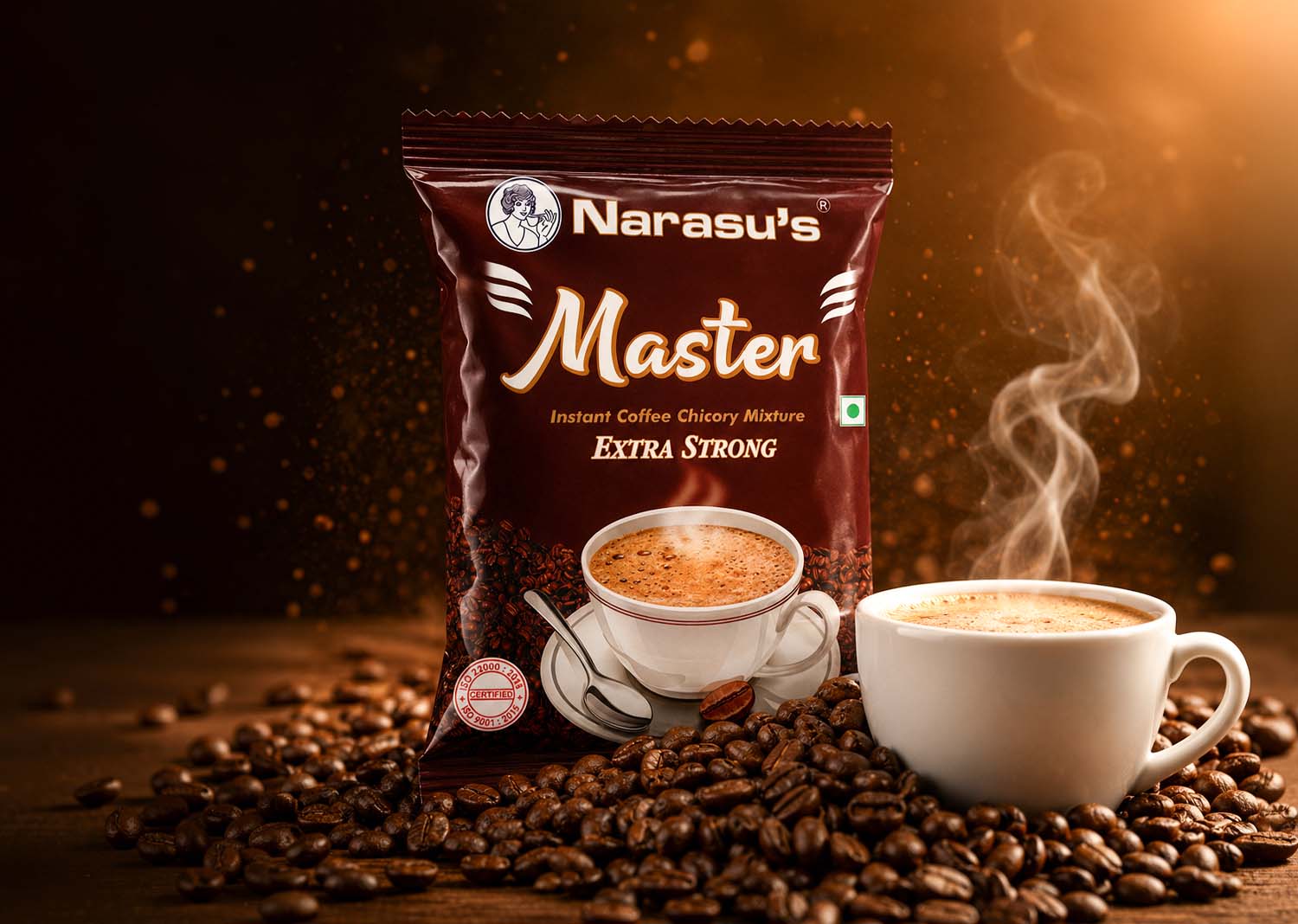
If you prefer working with an instant format for desserts where you need precise measurements, Narasu's Master Extra Instant Filter Coffee dissolves evenly and gives you a controlled flavour input without the variation that comes from brewing decoction to different strengths on different days.
4. Coffee as an Evening Wind-Down Drink
South Indian coffee culture is not limited to mornings. Many households serve a lighter, milkier cup in the evenings as a wind-down drink, particularly for older family members who prefer something warm but not too stimulating.
The key is adjusting the decoction-to-milk ratio. An evening cup typically uses less decoction and more hot milk than a morning cup. The result is gentler on the stomach and lower in caffeine intensity while still carrying the familiar flavour that makes it comforting.
This is also where the quality of your decoction matters more than people realise. A poorly made decoction tastes harsh even when diluted heavily. A well-balanced one stays pleasant at any ratio.
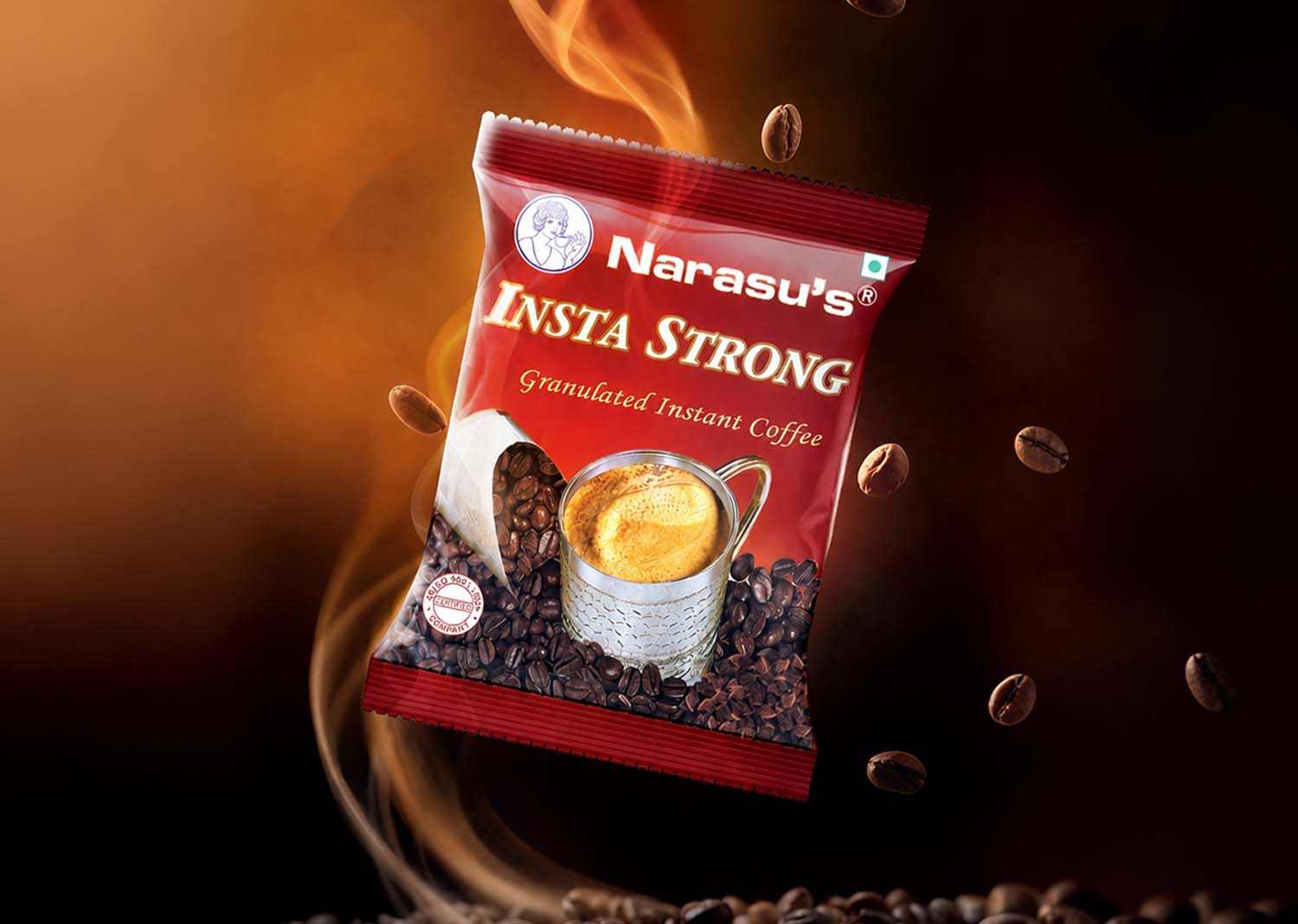
Narasu's Insta Strong Instant Filter Coffee is a practical option for evening cups because you can control the strength precisely by adjusting how much you use. There is no leftover brewed decoction to store, and the flavour stays consistent whether you make one cup or four.
Experience the versatility of a coffee that works morning, evening, and everywhere in between. Try Narasu's filter coffee range today.
5. Coffee Smoothies and Protein Shakes
This is the most recent addition to how South Indians use decoction at home, driven largely by younger households that combine fitness habits with traditional food preferences.
Adding decoction to a banana smoothie or a protein shake gives it a coffee flavour without requiring you to buy separate coffee-flavoured protein powder or syrups. It integrates naturally with banana, dates, peanut butter, and oats, all of which pair well with the slightly bitter, roasted character of South Indian filter coffee.
A simple coffee smoothie: one ripe banana, one cup cold milk, two tablespoons decoction, a spoon of peanut butter, and a few ice cubes. Blend until smooth. It is filling, has a natural caffeine boost, and tastes far better than any packaged coffee-flavoured drink.
The decoction-based approach also avoids the added sugars and artificial flavours that most commercial coffee smoothie products carry. You know exactly what is in the cup because you made it yourself with ingredients you trust.
Narasu's Vidiyal Filter Coffee Decoction is well suited to this because the ready-to-use format means you do not have to brew a separate batch just to add two tablespoons to a blender. It saves time without compromising on what the decoction actually tastes like.
Conclusion
Coffee decoction is one of the most underused ingredients in a South Indian kitchen. It works as a cold coffee base, a marinade component, a dessert flavouring, an evening drink, and a smoothie ingredient, all without losing the character that makes South Indian filter coffee worth drinking in the first place.
What makes this possible is starting with a decoction that is actually well-made. If you have ever wondered what sits behind that consistency, the roasting decisions, the chicory balance, the blending standard that hasn't shifted in nearly a hundred years, What Makes Narasu's the Best? answers that in full. It is worth reading before your next cup.
The best coffee brand in South India has built its reputation on exactly that standard, consistent flavour, reliable strength, and a chicory balance that holds up across every use case described here.
Frequently Asked Questions
Q1: Can I store leftover coffee decoction and use it the next day?
Yes. Freshly brewed decoction can be stored in a clean, airtight container in the refrigerator for up to two days. The flavour stays largely intact, though it is best used within 24 hours for cold coffee or cooking purposes. Narasu's Vidiyal Filter Coffee Decoction removes this concern entirely since it comes ready to use with a consistent shelf life.
Q2: How much decoction should I use in cooking compared to drinking?
For drinking, the standard ratio is roughly one part decoction to two parts hot milk. For cooking and marinades, two to three tablespoons of decoction per 500 grams of protein or vegetables is a good starting point. Adjust based on how prominent you want the coffee flavour to be in the final dish.
Q3: Is South Indian filter coffee decoction the same as espresso?
They are similar in the sense that both are concentrated coffee extracts, but they are not the same. South Indian decoction uses a slower gravity-based extraction through a metal filter and typically includes chicory in the blend. Espresso uses high-pressure extraction and no chicory. The flavour profiles are distinct, with South Indian decoction being earthier and less acidic overall.
Q4: Which Narasu's product works best for someone who wants filter coffee taste without brewing equipment?
Both Narasu's Insta Strong Instant Filter Coffee and Narasu's Master Extra Instant Filter Coffee are designed for exactly this. They deliver the characteristic strength and body of a South Indian filter coffee without requiring a traditional filter setup. For those who want a ready-to-use decoction format specifically, Narasu's Vidiyal Filter Coffee Decoction is the most direct option.
1771819270.jpg)
1771822569.jpg)