Legacy Never Fades
Why Narasu's Is the Best Coffee Brand South India
Introduction
Have you ever noticed that your morning cup tastes exactly the same today as it did ten years ago? That kind of consistency is not accidental. It is the result of a deliberate, disciplined process that the best coffee brand in South India has followed since 1926.
In this blog, you will understand exactly how Narasu's maintains that unmistakable taste across every batch, every region, and every cup. From sourcing to roasting to blending, every step has a reason.
What Makes Best Coffee Brand in South India Different from Other Coffee?
South Indian filter coffee is not just a beverage. It is a brewing method, a cultural practice, and a precise science. Unlike espresso or instant coffee, filter coffee relies on a slow drip process where hot water passes through finely ground coffee powder to produce a thick, aromatic decoction. This decoction is then mixed with hot milk to create the cup most South Indians grew up with.
The key difference lies in the grind size, the coffee-to-chicory ratio, and the roast level. Get any one of these wrong and the taste shifts completely. This is why most home brews never quite match what a trusted brand delivers. The variables are too many to control without a standardised process.
Coffee professionals suggest that the ideal South Indian filter coffee requires a medium to dark roast, a precise chicory blend, and a grind that allows slow, even extraction. These are not preferences. They are requirements.
If you are curious about how South Indian coffee culture evolved over centuries, our blog on the History of Coffee in India traces this fascinating journey from its earliest roots to the modern cup.
Why Does the Chicory Blend Matter So Much in Traditional Coffee?
Chicory is one of the most misunderstood ingredients in South Indian coffee culture. Many people assume it is just a cost-cutting additive. In reality, chicory plays a specific functional role in the final cup.
When added in the right proportion, chicory deepens the colour of the decoction, adds a mild bitterness that balances the natural acidity of coffee, and improves the body of the brew. Too much chicory and the coffee loses its character. Too little and the cup feels thin and flat.
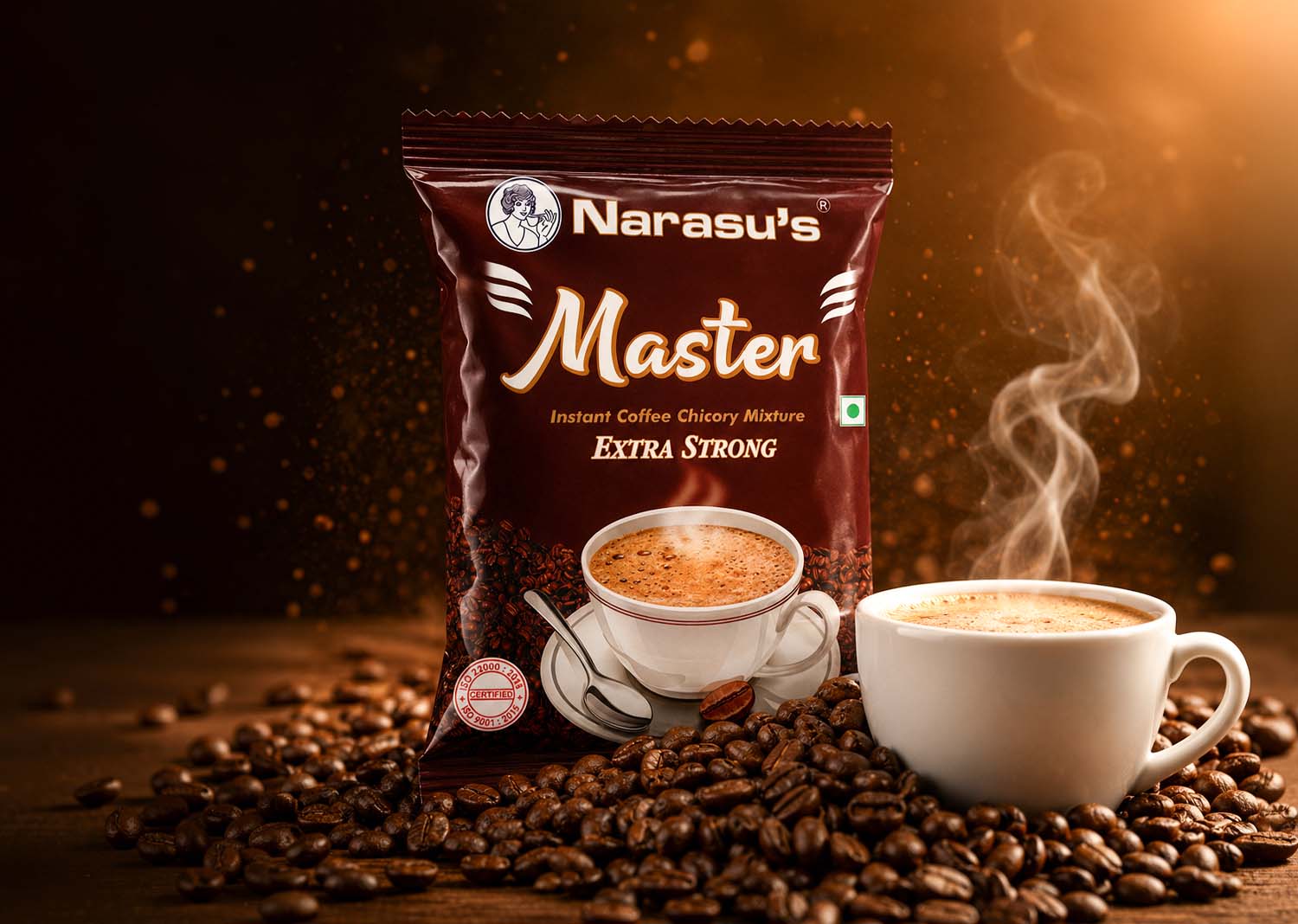
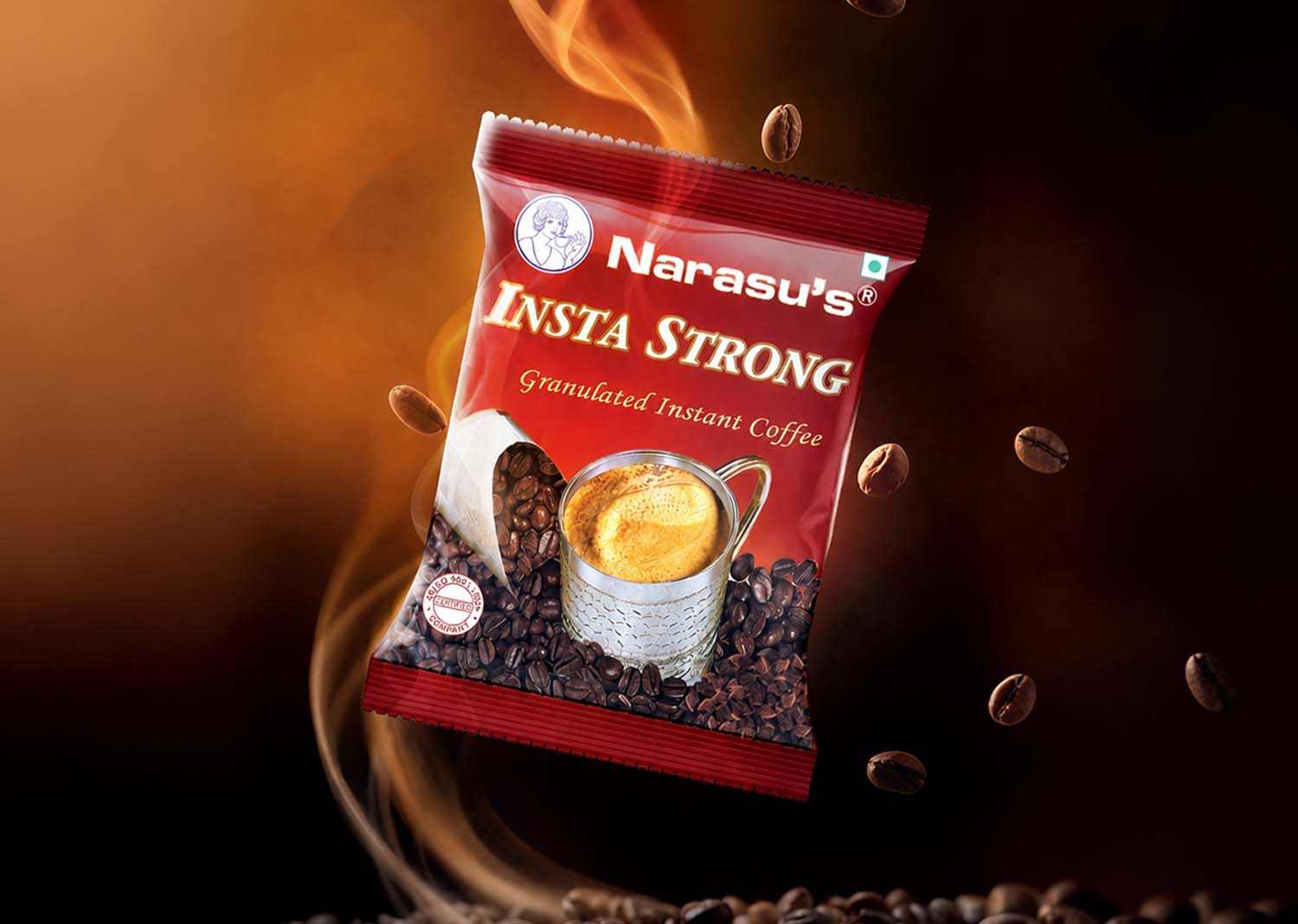
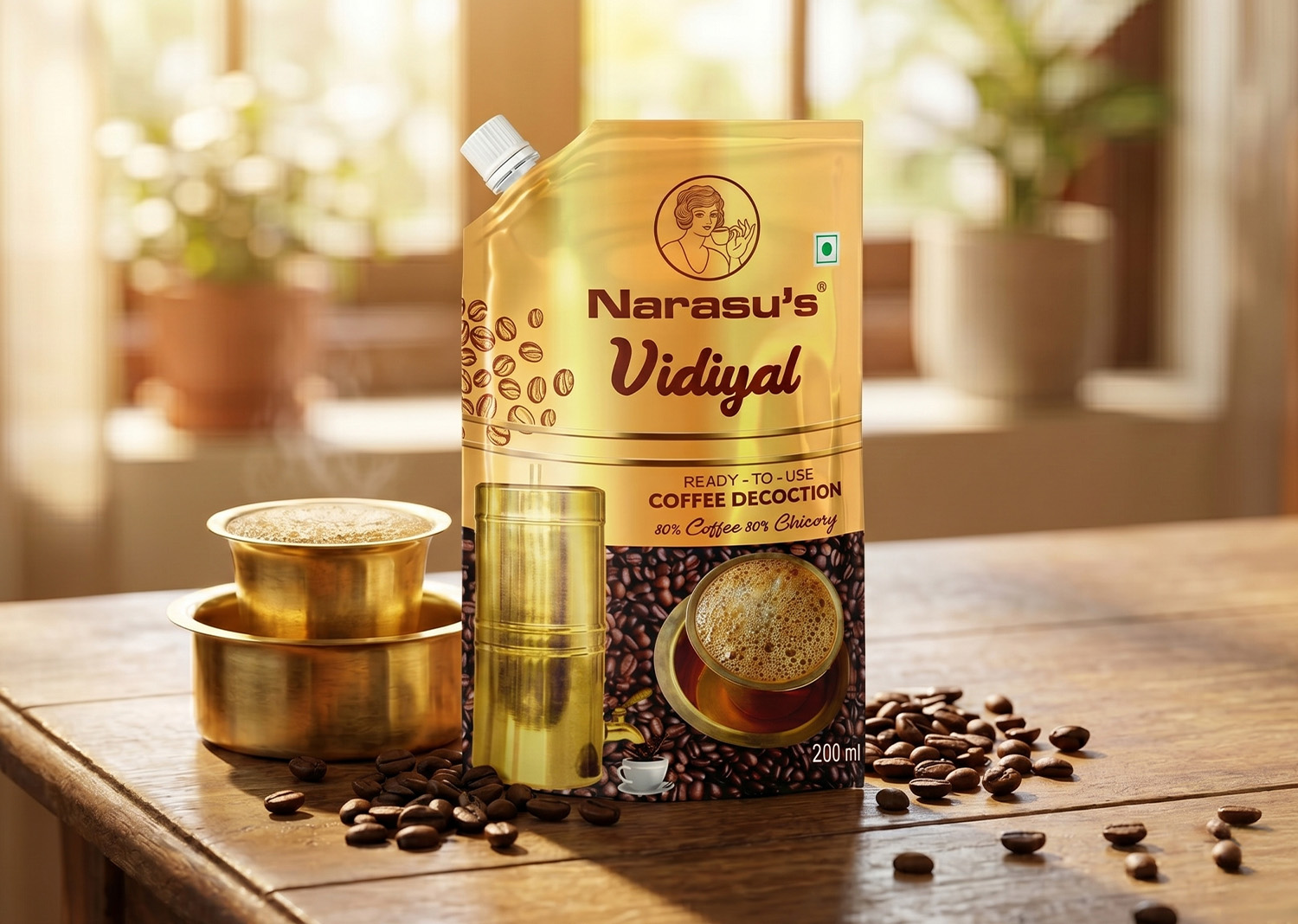
This is why the ratio matters enormously. A blend closer to 80:20 coffee to chicory, like the kind used in Narasu's Vidiyal filter coffee decoction, delivers a fuller, more traditional South Indian cup. For those who prefer a slightly stronger profile, Narasu’s Insta Strong coffee’s 70:30 ratio offers more intensity while still maintaining balance. And for coffee drinkers who want maximum strength, Narasu’s Master Extra Strong coffee’s 57:43 blend pushes the chicory higher while keeping the coffee character intact.
According to food scientists, chicory also contains inulin, a natural prebiotic fibre that supports digestion. So the right chicory blend is not just about taste. It is about achieving a consistent, full-bodied decoction every single time.
How Does Roasting Affect the Final Taste of Filter Coffee?
Roasting is where the real character of coffee is built. The temperature, the duration, and the cooling process all determine what ends up in your cup.
A lighter roast preserves more of the bean's original acidity and floral notes. A darker roast develops deeper, more bitter flavours with a heavier body. South Indian filter coffee traditionally leans toward a medium-dark roast that delivers boldness without excessive bitterness.
What makes this difficult at scale is maintaining the same roast profile across every batch. Even minor variations in temperature or timing can shift the flavour noticeably. This is why precision roasting is not optional for a brand aiming for consistency.
Narasu's roasting process has been refined over nearly a century of production. Every batch goes through the same controlled parameters to ensure the decoction you brew today is indistinguishable from the one you brewed last month.
What Role Does Bean Sourcing Play in Consistent Coffee Quality?
Consistency in taste begins long before the roasting stage. It starts with the beans. Coffee grown in different regions, at different altitudes, and under different conditions produces significantly different flavour profiles.
Sourcing the same quality of beans season after season requires strong relationships with growers and a strict quality assessment process. Beans that do not meet the required moisture content, density, or flavour profile are rejected before they ever reach the roaster.
Studies in coffee quality management show that bean-level consistency accounts for nearly 60% of the final taste outcome. The remaining 40% depends on processing. For the best coffee brand in South India, this sourcing discipline has been a non-negotiable since the beginning.
Why Do Most Homemade Decoctions Never Taste the Same Twice?
This is one of the most common frustrations among filter coffee lovers. You use the same brand, the same filter, the same water. Yet the cup tastes different every morning.
The reason is usually inconsistency in one or more of these variables: the amount of coffee powder used, the temperature of the water, the time allowed for dripping, or the ratio of decoction to milk. Any one of these shifts the outcome noticeably.
Authentic coffee brands address this by ensuring the powder itself is standardised. When the grind size, moisture content, and density of the powder are consistent, the extraction becomes predictable. The cup you get from a well-standardised coffee powder will be far more repeatable than one made from inconsistently processed beans.
For those who want to skip the brewing process entirely without compromising on taste, Narasu’s Vidiyal ready-to-use coffee decoction is a practical solution. It removes most of the variables entirely, giving you a consistent, authentic South Indian cup every single time with minimal effort.
Conclusion
Consistency in coffee is not magic. It is the result of disciplined sourcing, precise roasting, controlled blending, and standardised processing. Every cup that tastes the same as the last one is evidence of a process refined over nearly a century.
Whether you prefer a bold, high-chicory blend for maximum strength, a balanced everyday brew, or a ready-to-pour decoction for effortless mornings, Narasu's has built each option around the same commitment to quality and precision.
For anyone who values authentic coffee and expects the same quality every single time, choosing the best coffee brand in South India means choosing one that treats consistency as a craft. Narasu's has done exactly that since 1926, and every cup reflects that commitment.
Bring home the legacy of consistent, authentic South Indian filter coffee. Order Narasu's today and taste the difference that precision makes.
FAQ Section
Q1. Why does Narasu's coffee taste the same every time?
Narasu's maintains consistent taste through standardised bean sourcing, precise roasting, and a controlled chicory blend. Every batch follows the same process, ensuring the decoction you brew today tastes identical to the one you brewed a year ago.
Q2. What is the right coffee-to-chicory ratio for South Indian filter coffee?
The most popular ratio is 80:20, which delivers a bold yet balanced cup. Different blends offer different ratios to suit varying taste preferences, from a milder 70:30 to a stronger high-chicory option for those who want maximum intensity.
Q3. Why does my homemade filter coffee taste different every day?
variations in coffee powder quantity, water temperature, drip time, and milk ratio all affect the final cup. Using a standardised coffee powder reduces one major variable and makes your brew far more consistent.
Q4. Is chicory good or bad in filter coffee?
Chicory in the right proportion is beneficial. It deepens the colour, balances acidity, and improves the body of the decoction. It also contains inulin, a natural prebiotic fibre that supports digestion. The key is the right blend, not the absence of chicory.
1771819270.jpg)
1771822569.jpg)